Elydora
An open protocol that turns every AI agent action into a signed, chained, verifiable record.
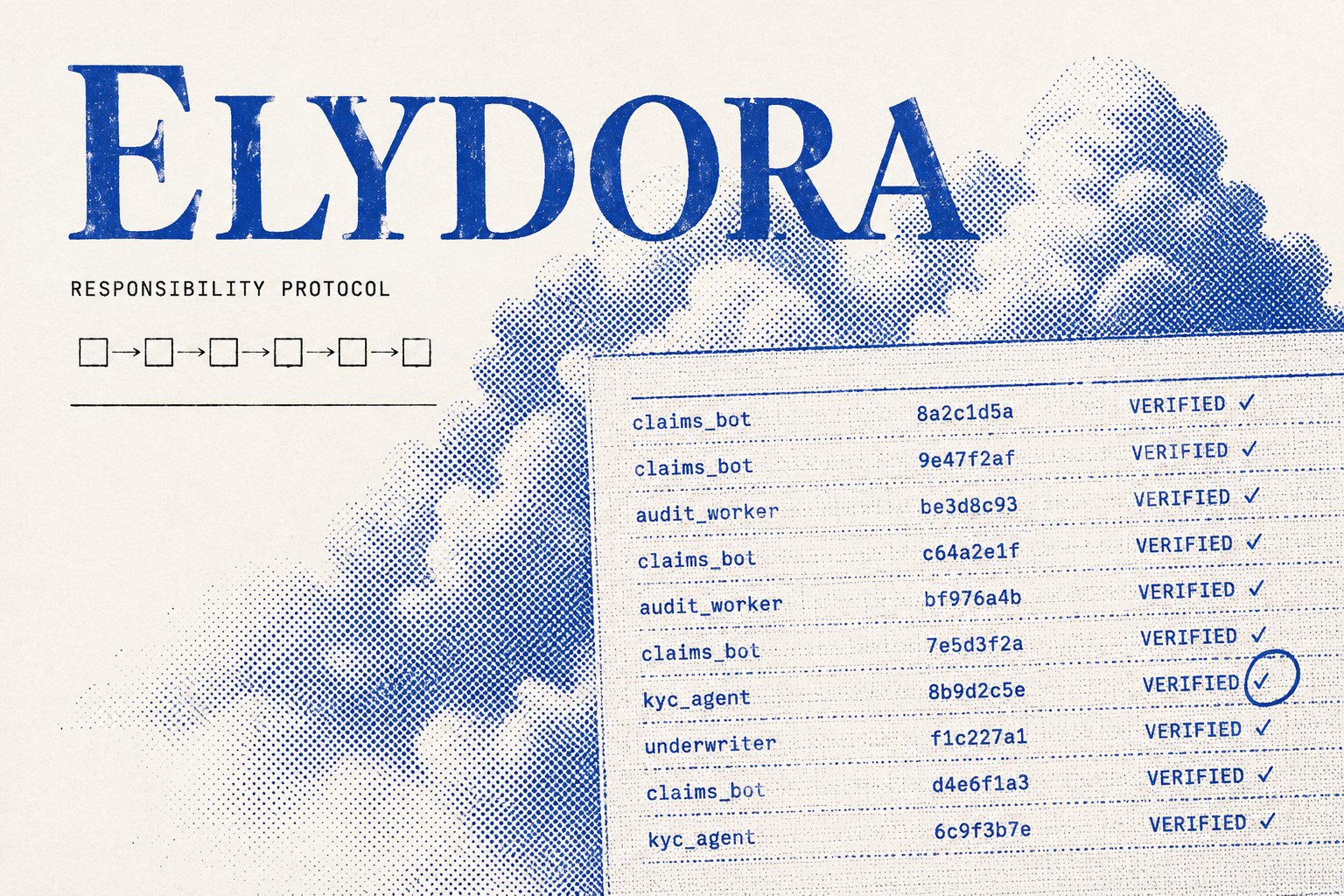
Elydora is the responsibility layer for AI agents. When an agent reads a file, calls an API, changes a database row, or sends a message, Elydora writes a record of that action, signed by the agent and chained to the record before it. The result is a history of everything an agent did that nobody, the platform operator included, can edit in silence. I have led it as CEO since October 2025.
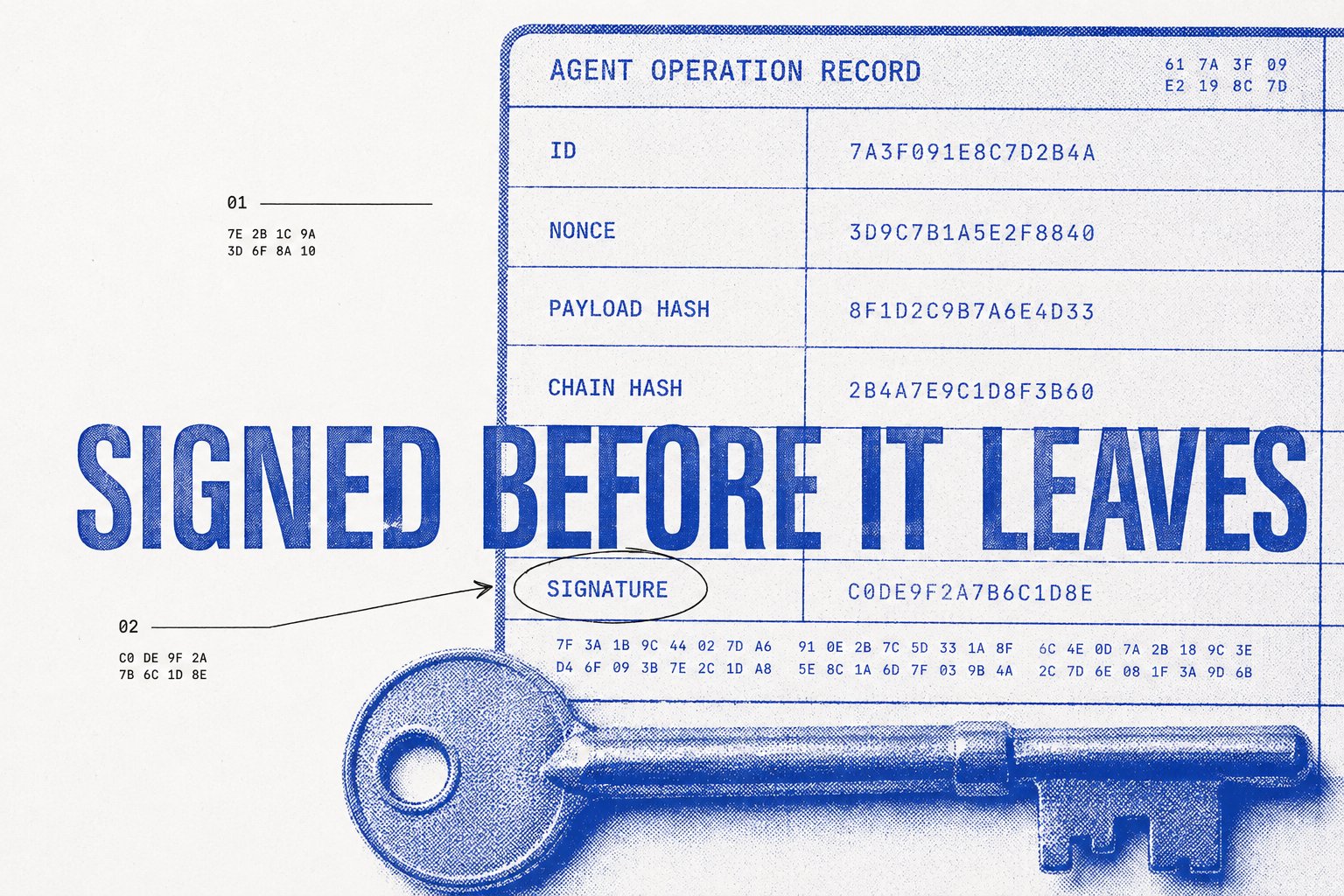
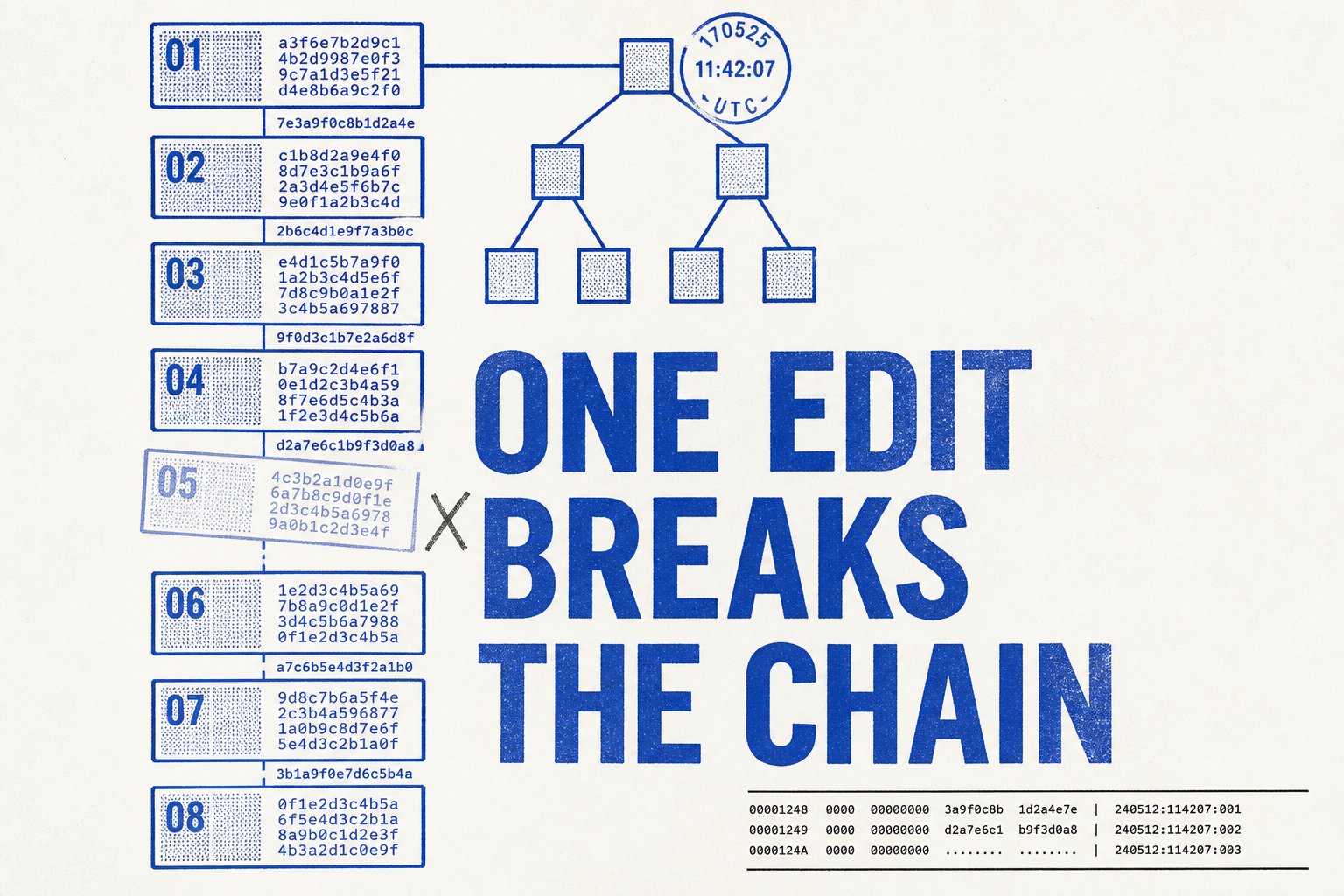
Each record is an Elydora Operation Record, an EOR. The SDK builds it inside the agent's process: a UUIDv7 id, a 16-byte nonce, a SHA-256 hash of the canonicalized payload, and a chain hash that commits to the previous record. The agent signs the record with its Ed25519 key before it leaves the process. The server verifies the signature and the chain hash, rejects replays, and answers with an acknowledgment receipt, the EAR. Insert, delete, or reorder one record and the chain no longer verifies.
Records roll up into epochs. Each epoch hashes its records into a Merkle tree, and the root is anchored with an RFC 3161 timestamp from a public authority; that root is the protocol's fourth structure, the EER. The protocol stands on four open standards: Ed25519 (RFC 8032), SHA-256 (FIPS 180-4), JSON Canonicalization (RFC 8785), and the Time-Stamp Protocol (RFC 3161). It is independent of model, framework, and application, so a coding agent, an enterprise agent, and a multi-agent system can share one audit format.
The console shows agents, operations, epochs, and pending exports on one screen. Registering an agent generates its Ed25519 keypair in the browser; only the public key leaves the machine. Any operation opens to its payload, chain hashes, and receipt, and one click verifies the signature, the chain, the receipt, and the Merkle inclusion. Exports for a time range come out as JSON or PDF for auditors. Access control has five roles, from a read-only investigator to the organization owner.
Elydora hooks into fifteen agent runtimes with one command and no code change: Augment Code, Claude Code, Cline, Codex CLI, GitHub Copilot CLI, Cursor CLI, Factory Droid, Gemini CLI, Grok Build, Kimi Code, Kiro CLI, Kiro IDE, Letta Code, OpenCode, and Qwen Code. Everything else uses the SDKs: Node.js with a command-line tool, Python with sync and async clients, and Go with no runtime dependencies.
The server, the console, and the SDKs are open source under Apache 2.0 in the Elydora-Infrastructure organization. One script starts a self-hosted stack with Docker Compose and generates its secrets; a Helm chart does the same on Kubernetes. The docs site covers the protocol, the API, the SDKs, the integrations, RBAC, security, and self-hosting in English and Chinese. Elydora is built for the rules now arriving for high-risk AI systems. The EU AI Act is one of them, and it requires audit trails.